
DRUMRIGHT — A group of Central Tech students have been working to brighten evenings in Yale as part of their Community Action Project for an upcoming SkillsUSA competition. By the time they compete, the lights will be shining on Yale’s only community basketball court.
Peyton Sims from Mannford, Christopher Ford from Sapulpa, and Ben Whittset and Cayden Lewis from Yale have teamed up to install solar-powered lighting around the Yale First Baptist Chuch’s basketball court in order to create a safer and more accessible place for local youth to gather and play. Lewis said the idea came after looking for a need within the community.
“We kind of looked around and reached out to some people to see what they needed,” Lewis said. “We found out that First Baptist Church of Yale needed some lights for the basketball court because that’s basically the only basketball court in Yale that has a set of hoops on it anymore.”
He further explained how without lighting the court has only been usable during daylight hours — by installing new light poles and fixtures the students hope to open the space for evening games, additional activities, and even local community events.
The upgraded court is expected to help bring the community together during upcoming events, according to Liam Shaklee, who is the diesel tech instructor and member of the church’s congregation. He said the church hosts an annual block party each May and already holds a cornhole tournament as a community engagement event. With the improved court, he said a basketball tournament could become another possibility in the future. Additionally, improvements are coming at just the right time because come September there will be a celebration in honor of the church’s 125th birthday.
For Lewis, who attends First Baptist Church of Yale as well, the project is about more than competition — it’s about giving back to a town that could benefit from more positive activities for young people.
“I really like to give back to the community,” Lewis said. “Yale could use some improvement and better things so kids aren’t out causing trouble or just stuck inside.”
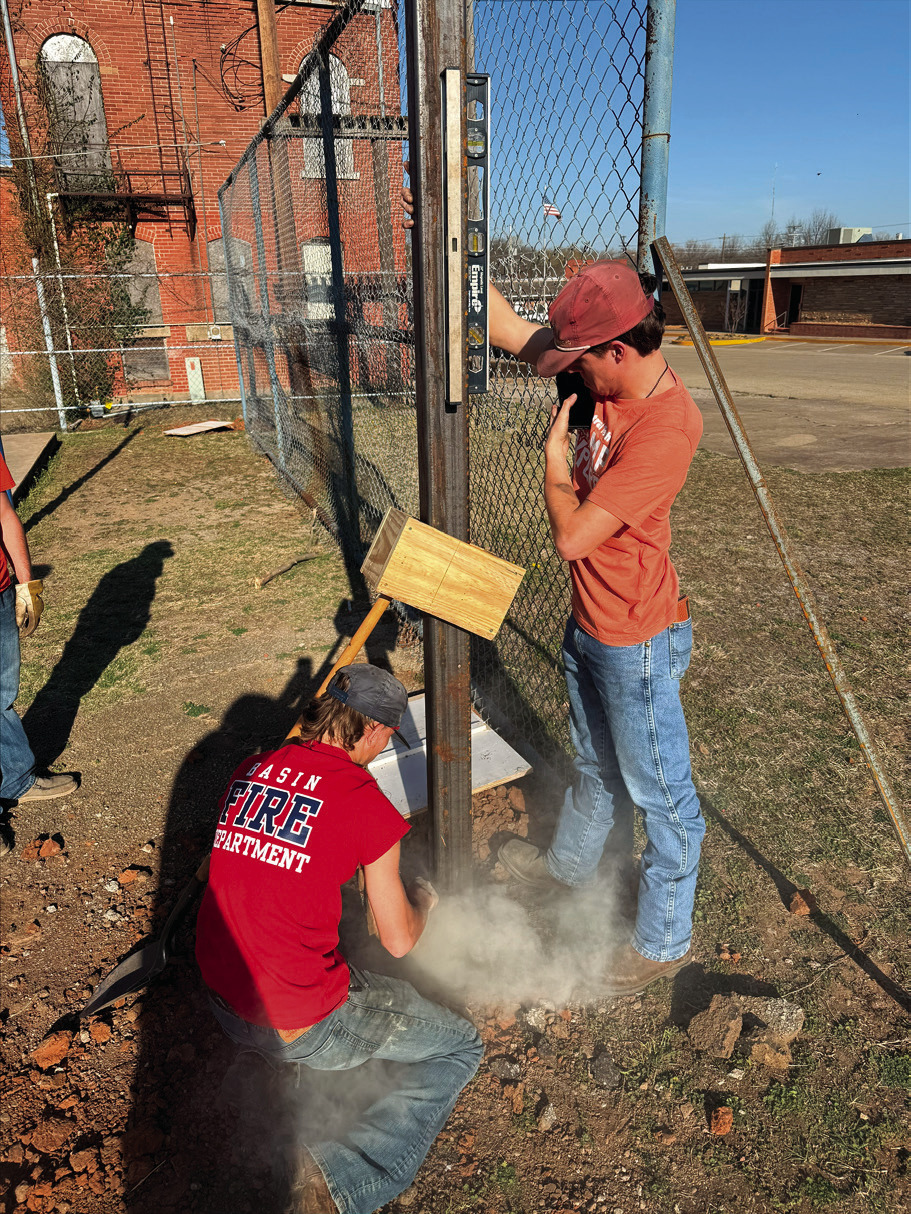
Lineman Instructor Norris Carrier, whose students helped by providing a pole truck and specialized equipment to help dig the holes for the light poles, expressed helping with the project was an easy decision — relaying basketball had provided a positive outlet when he was younger and expressing optimism that it could do the same for others.
“It’s just a great idea for a community to have a place for guys to go and do something besides sit on your phone,” said Carrier. “It’s just a win.”
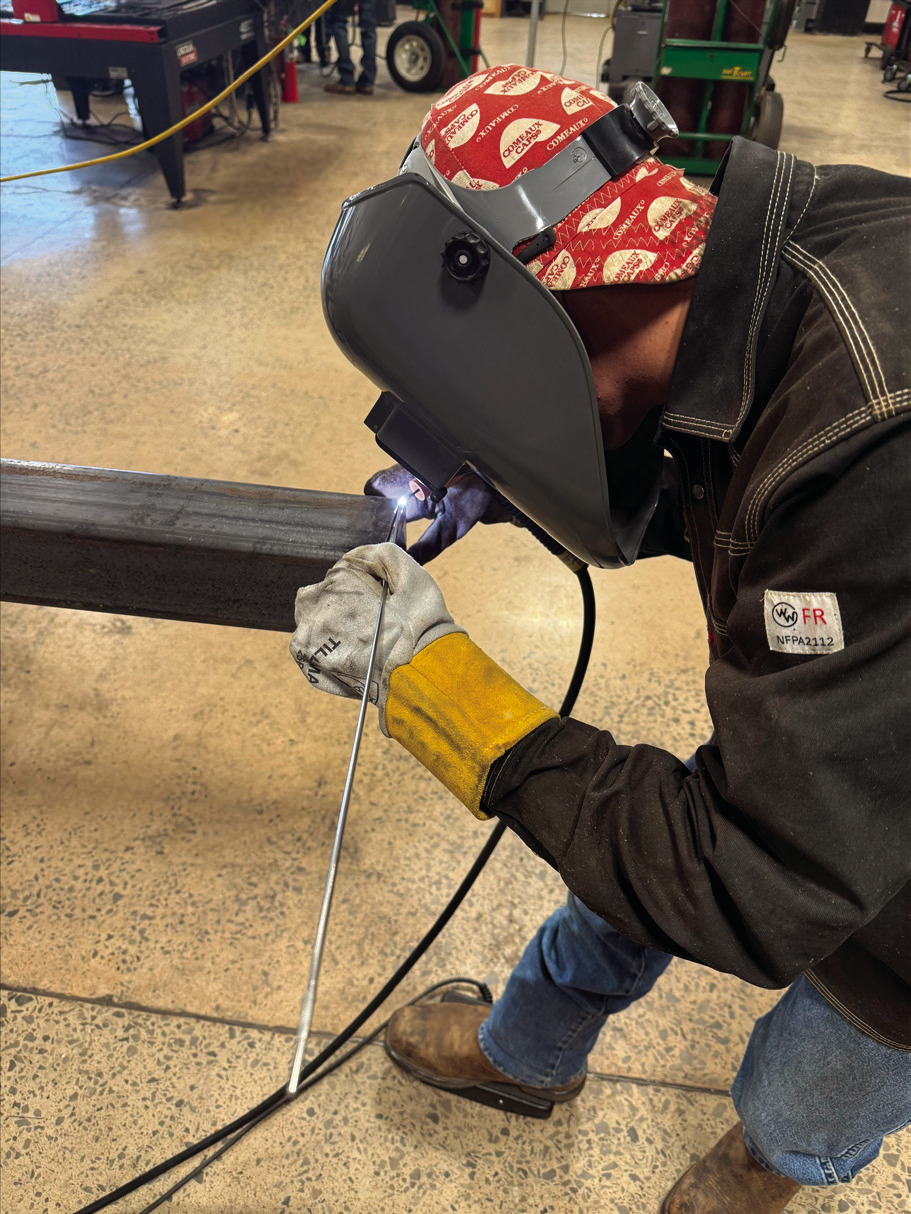
The core four students contributed different pieces of the work from fabricating metal posts to constructing concrete forms and assisting with installation handling much of the fabrication. However, before on-site work began safety measures were taken to ensure the area could be excavated safely — another aspect that Carrier and the lineman program students helped with.
“We made sure it was going to be safe to dig,” Carrier said. “We called Okie and verified there weren’t any utilities in the way. There was a gas line nearby so we had to be careful around that and make some adjustments.”
The lighting system installed is solar powered with fixtures that will charge during the day and automatically illuminate the court after dark. Shaklee said each light produces approximately 8,000 lumens — providing brightness comparable to a streetlight.
Materials for the project, including poles, concrete, and lighting costs an estimated $2,500, according to Diesel Tech Instructor Troy Elliott. For a smalltown church, students said that expense would have been difficult to manage without volunteer labor.
The students estimated the project could impact a significant number of people in Yale. The church youth group includes roughly 21 to 31 members and the team estimates there are around 180 other youth in the community who could potentially use the court. Currently, about 40 to 50 people use the court weekly during daylight hours, according to Lewis. Students were optimistic that number would increase with the lighting installed.
At the beginning of this month, students had been working on the project for three weeks after planning had started earlier in the year, according to Sims. While installation of the light poles were already underway, a few finishing touches remained at the time.
“We’re still working on it,” Sims said. “We still have to put some lights up and work on fixing the fence up a little more.”
The project was anticipated to be complete within two weeks of April 2, if weather cooperated. Beyond installing lighting the core four were also considering additional improvements if time allowed including repainting the court and addressing minor safety concerns.
“We’d like to go through and repaint the court and kind of clean it up,” Lewis said. “That way it’s more appealing and safer.”
The students will be showcasing their project at the upcoming SkillsUSA competition which is scheduled for April 1921. Their handwork both fulfills the requirements of a Community Action Project and highlights how a few motivated student can make a meaningful difference proving that even a small project can have a big impact.